> ## Documentation Index
> Fetch the complete documentation index at: https://docs.kameleoon.com/llms.txt
> Use this file to discover all available pages before exploring further.
# CloudImage
> Activate Kameleoon on CloudImage to serve Kameleoon-optimized images through CloudImage's CDN using a configured domain alias.
## Activate Kameleoon on CloudImage
1. In CloudImage, select **Image settings** > [**Domains**](https://admin.cloudimage.io/project/settings/domains).
2. Create an alias.
* Prefix and suffix the alias with double underscores (recommended by CloudImage).
3. Specify the Kameleoon path name.
* Remember to enter your Kameleoon sitecode.
4. Save your changes
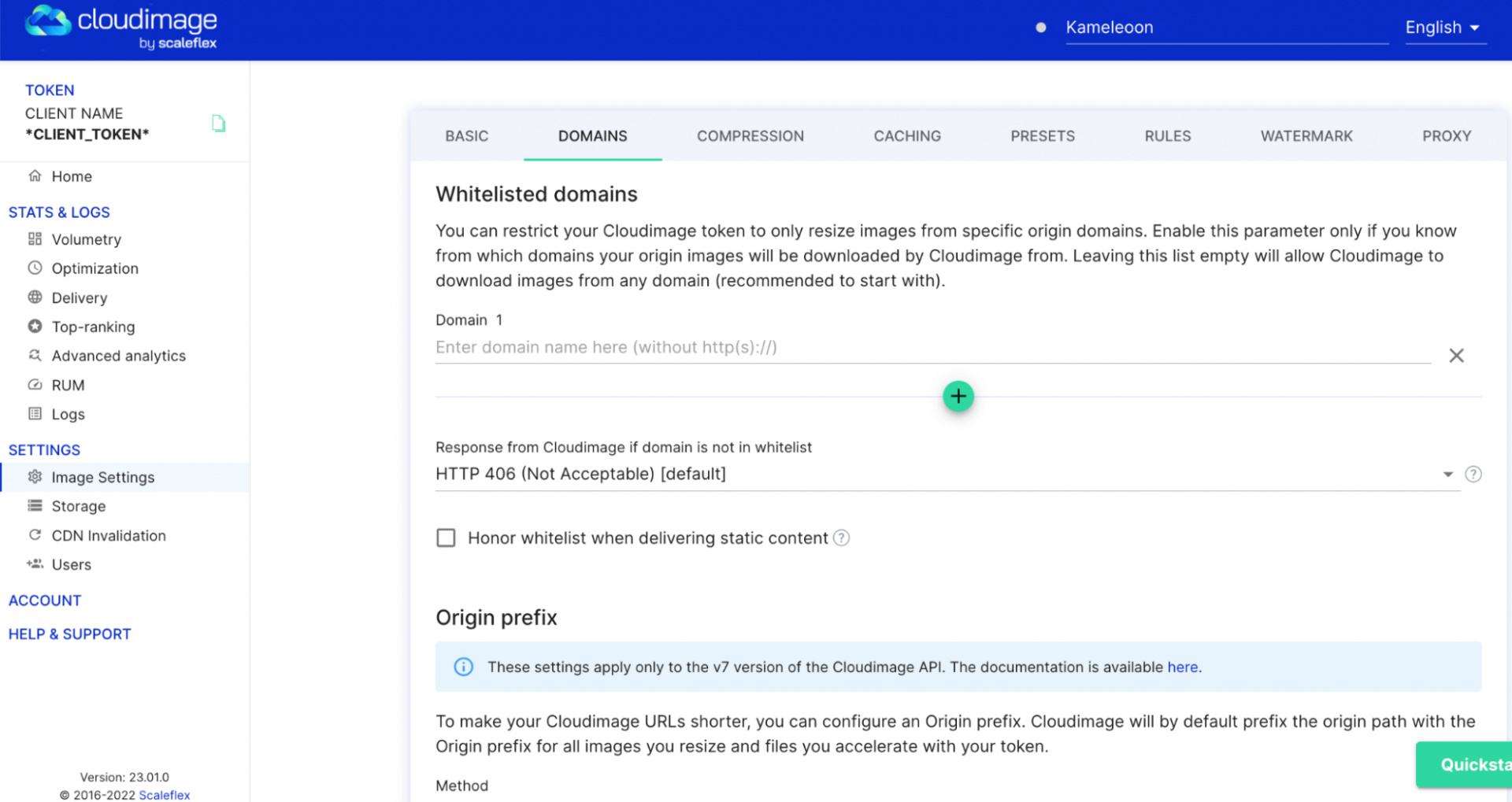
Do not hesitate to consult [CloudImage documentation](https://docs.cloudimage.io/) for more details.
## Activate CloudImage on Kameleoon
1. Log in to Kameleoon, and go to [your dashboard project page](https://app.kameleoon.com/projects/dashboard).
* Ensure you're using an admin account.
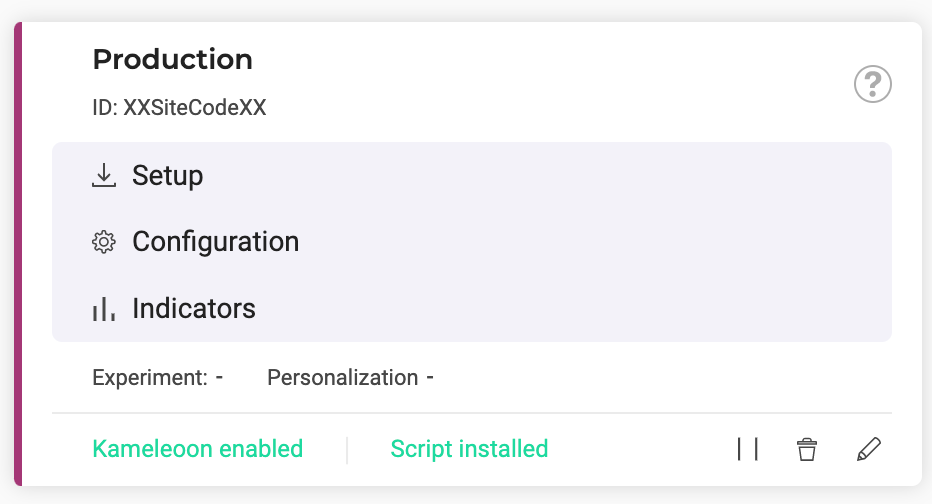
2. Select your project and click **Setup**.
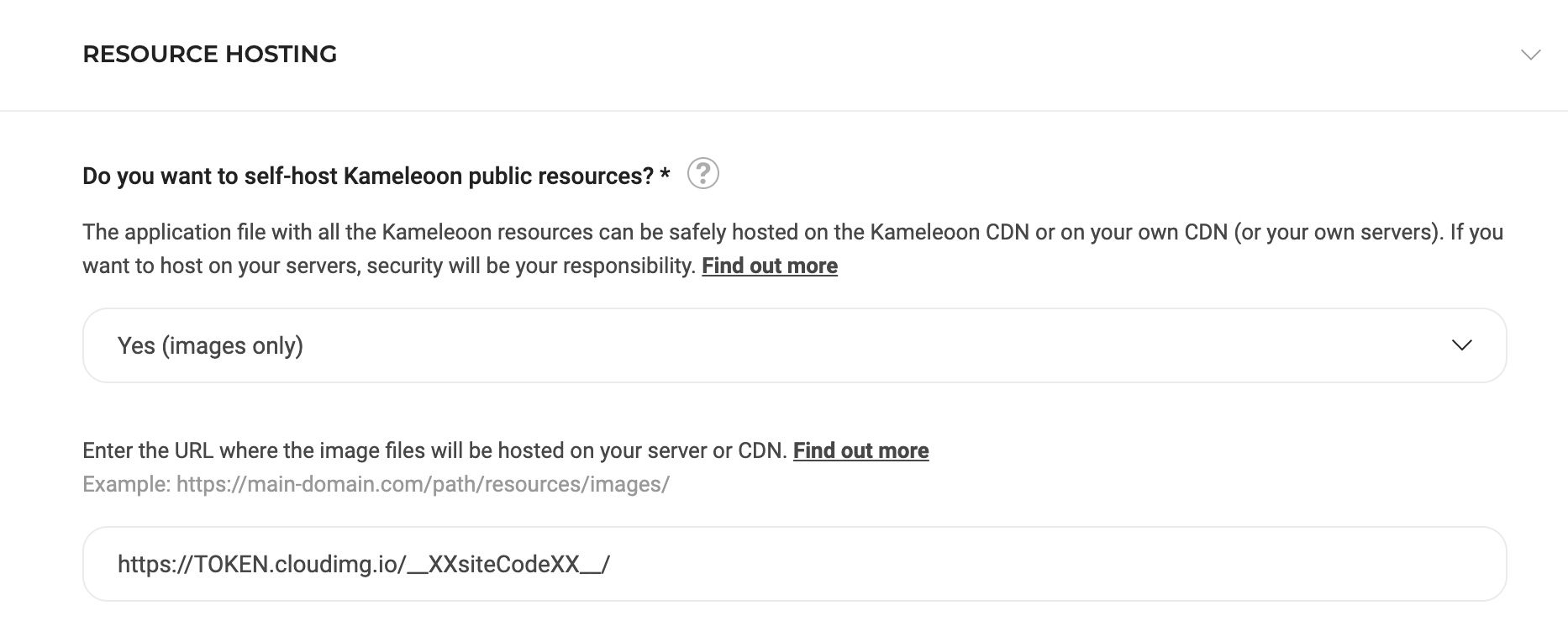
3. In the **Resource Hosting** section, select **Yes (Image Only)**.
4. Enter the following URL according to your cloudImage token and the CloudImage setup: `https://TOKEN.cloudimg.io/_XXsiteCodeXX/`
Then in the Resource Hosting section, select **Yes (../image Only)** and then enter the following URL according to your cloudImage token and to the CloudImage setup: `https://TOKEN.cloudimg.io/_XXsiteCodeXX/`
* **TOKEN** is your `cloudImage` token, and **`_XXsiteCodeXX`** is the alias you created in CloudImage.